

Fast-growing plants can have your landscape feel established without waiting many years. They will fill your garden corners filled with them, establish some height and screens, or add some pop of color. Here are 10 plants that give quick results:
The top 10 fastest-growing plants—both trees, vines, and flowers—that can have a great impact on your garden space are outlined below. However, the growth rate can be relative; it depends on your region, soil, climate, sunlight conditions, and plant maintenance.
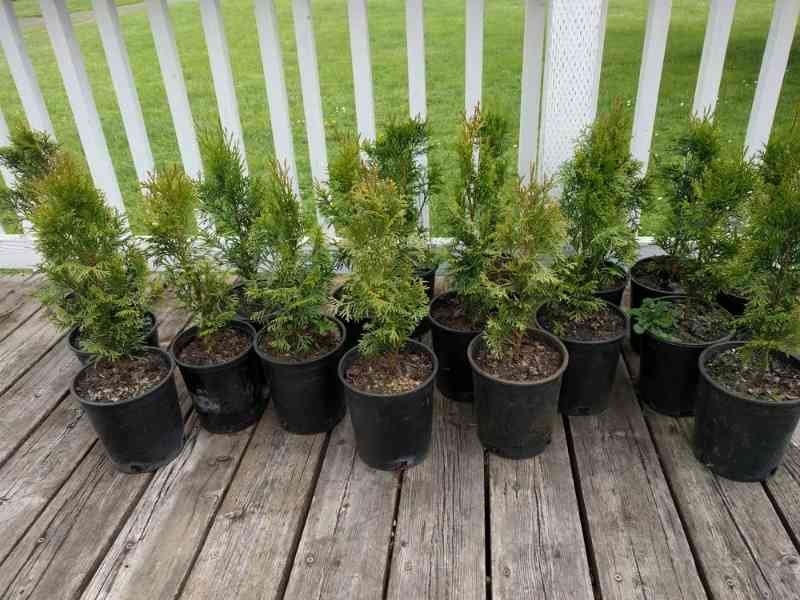
Thuja Green Giant adds lush greenery and year-round shade. Depending on location and conditions, Thuja Green Giant can grow 3–5 feet tall per year! This is a good tree for creating privacy and wind protection, especially for large yards, and these privacy plants can quickly fill in the space, as it is one of 10 of the top 10 fast-growing plants.
Keep these privacy plants 6–8 feet from fences or from one another so as not to disturb mature widths.
Growing 3–6 feet per year, Leyland Cypress has deep evergreen shrubs, which means it could provide privacy at any time of the year.
This privacy plant is ideal for privacy fences and wind barriers and is one of the 10 best-looking fast-growing plants with dense foliage when utilized in larger yard spaces. For tight spaces where hedge plants are necessary, leave 4–6 feet between plants.
Clumping bamboo also grows tall, but unlike most other Arborvitae plants, it grows straight up and is a better fit for smaller yards that might be lacking horizontal space. Its densely arranged evergreen shrubs make it one of the top 10 fastest-growing plants because it's evergreen; it keeps gardens looking put-together even in the cold of winter and helps the overall landscape feel neater and look established. Spaced out 2–3 feet apart, these can make a perfect screen along fences.
Sweet viburnums are one of the 10 best fast-growing plants, often growing 3 feet in the spring and summer. If they’re placed in an area where warm temperatures occur throughout much of the year, they will not go dormant.
These are known for having rich green foliage when young, that turns a bit more bronze as they age, and can make dense screens at home or add depth to more colorful landscapes.
Italian cypress plants offer a strong vertical garden element that's only a few feet wide, so the vertical plants are sure to draw an eye to the entryway. Plant these alongside one another in rows where height is what will deter neighbors from spotting your lawn—or use one to frame your entrance and keep some other larger plants further back from the door, or along a fence that needs green coverage. Leave an appropriate amount of room for its mature size.
With a profile as thin as 1 foot wide but with height reaching up to 17 feet, American Pillar Arborvitae is useful along any border where a wider planting could impede upon public space or yard structure—think along a property boundary or fence where it's difficult to establish more landscape space. For optimal growth, these fast-growing plants need regular water at the roots.
Keep from blocking neighbor access and give plants enough spacing to grow to maturity, or trim regularly when grown as screens or hedges.
Forsythia is a quick-growing flowering shrub bearing bright yellow spring flowers before the foliage. Forsythias can grow 2 to 3 feet each year and spread into borders and the garden edge very quickly.
Forsythia is also a terrific hedging shrub. The plant forms a thick, informal hedge and provides a beautiful dose of seasonal color to a garden.
Butterfly bush is one of the finest flowering bushes known for attracting butterflies, bees, and hummingbirds with its rapid growth. It can grow two to three feet a year and develops spikes of purple, white, pink, or blue flowers in summer.
These upright, blooming bushes provide lots of summer color to gardens and can be used as border plants or as part of a mixed ornamental garden.
A great choice when the budget and time clock on your garden look limited! These fast-growing flowers reach eye-catching levels when they grow between 5 and 7 feet tall in one growing season. They grow well in borders and add vibrancy where it might be lacking—or be perfect additions for a garden patch while longer plants make their mark.
If you are choosing tall varieties, you might want stakes for support from high wind conditions when grown in an exposed landscape area.
Zinnias thrive when given plenty of sunlight and make wonderful border fillers and cut flowers. Zinnias are loved by gardeners for their wide variety of hues and shapes and can quickly bring about floral color throughout the growing season—they often start at 1' tall in most species but can grow to 4' with some species! When grown as flowers to add to borders and beds and grown in large bunches of varied hues or one bright color, this often proves to be one of the top 10 most adaptable choices.
Suggested Reading: Why are Native Plants Beneficial for Home Gardens in 2026?
The simplest method for adding curb appeal quickly is by using fast-growing plants. If you are in need of a fast-growing hedge plant to provide screening and privacy, sturdy evergreens that will hold up in any weather, or fast-growing flowers to attract bees and butterflies all summer long, our list of fast-growing plants will suit your landscaping needs.
Some popular options for rapid privacy screen growth are Green Giant arborvitae, Leyland cypresses, and the varieties of narrow arborvitae. Choose based on your soil conditions, the space you have, the climate that you live in, and how large you would like it to get in the long run.
It varies quite a bit from species to species. Some rapidly growing shrubs can show great growth within a couple of growing seasons, but complete screens require longer periods to thicken appropriately. Consistent watering, proper spacing, and attention given to young plants can lead to more effective growth.
If planted in an unsuitable area, there can be problems. Consider how much space they have to grow into so that you'll know if they will be overgrown in short order. If you are trying to maintain it for formal hedge purposes, expect to do some trimming even with more adaptable species.
Some smaller flowering plants and shrubs and some columnar species can be done in containers. In pots, plants will have limited root systems and tend to dry out more quickly. They would require you to have a large enough pot with appropriate drainage and careful monitoring.
While most fast-growers benefit from some pruning, species with dense canopy requirements or a form of screening that resembles a hedge will require more. Some species don't require much or any trimming, so if you'd like to choose plants that won't necessarily add time to your yard chores, consider those that naturally form a more upright habit or the more columnar varieties.
This content was created by AI