

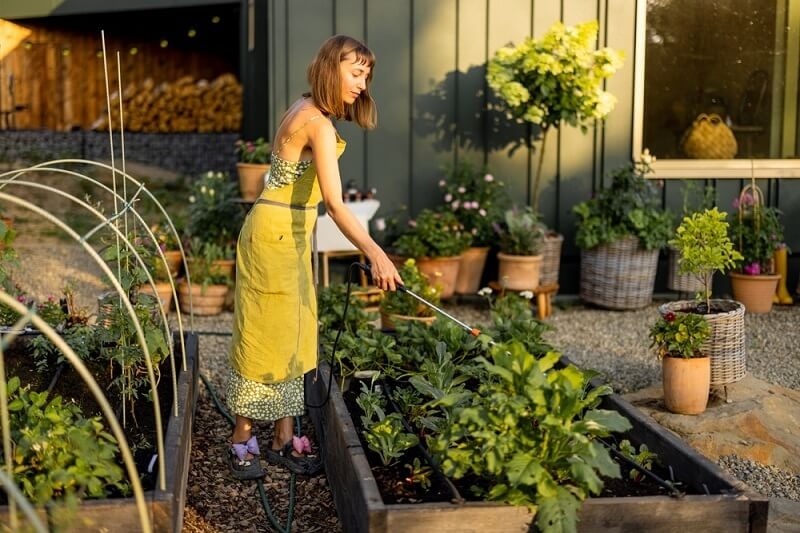
Sustainable gardening did not suddenly become popular in 2026. What changed is how normal it now feels. Practices that once seemed optional or idealistic are becoming standard choices in American homes. People are not chasing trends. They are responding to what works and what does not.
Water costs are higher in many areas. Summers last longer. Plants that once survived with regular watering now struggle. At the same time, homeowners want outdoor spaces that feel usable, not like another chore.
Eco friendly gardening fits into this shift because it removes friction. It favors plants that survive local conditions, layouts that do not demand constant correction, and choices that hold up over time. Sustainable garden ideas are spreading because they solve real problems that people face every season.
For years, gardening followed a familiar pattern. Large lawns. Decorative plants chosen for looks rather than durability. Regular fertilizer and pesticide use to keep everything in place.
That approach is harder to maintain now. Weather patterns are less predictable. Water restrictions are more common. Replacing plants every year gets expensive.
Sustainable gardening changes the focus. Instead of asking how a garden should look, people are asking how it should function. Green gardening practices emphasize stability, not perfection. When gardens stop fighting the environment, they require less attention and fewer resources.
This shift is not ideological. It is practical.
Top pick: How Cocopeat Enhances Soil Quality and Plant Growth
Sustainable gardening in 2026 looks different depending on location, but the logic behind it is consistent. Homeowners are simplifying decisions and letting conditions guide the design.
One of the most noticeable changes is plant selection. Many homeowners have learned through trial and error that some plants simply do not belong in certain climates.
Choosing plants adapted to local weather reduces failure. These plants handle heat, cold, or dry spells without constant help. Eco friendly gardening becomes easier when plants are not pushed beyond their limits.
This approach also reduces water use and fertilizer needs. Over time, gardens become more predictable instead of fragile.
Water management is driving many sustainable garden ideas. Sprinklers running on fixed schedules are being replaced by systems that respond to actual conditions.
Common changes include:
These green gardening practices are often adopted gradually. Homeowners make one change, see the benefit, then adjust another part of the garden.
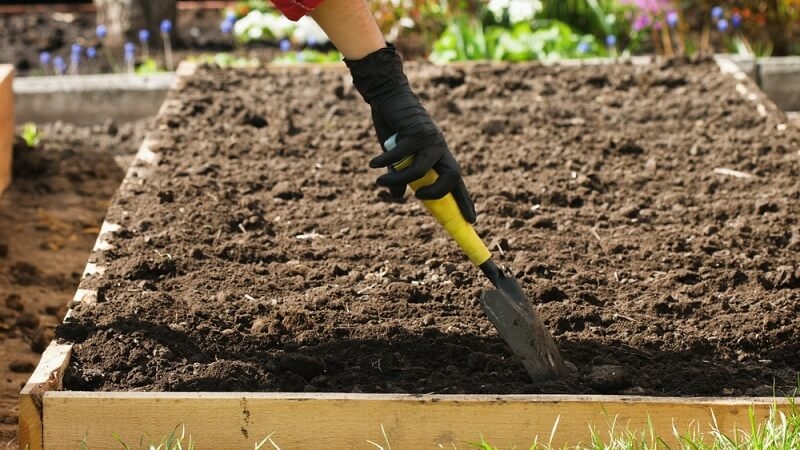
In many traditional gardens, soil is treated as something to correct rather than maintain. Sustainable gardening flips that thinking.
Healthy soil does not need constant input. Compost, decomposing leaves, and reduced disturbance improve structure naturally. Soil that holds moisture and nutrients evenly supports stronger plants.
Eco friendly gardening depends heavily on soil health because good soil reduces the need for fixes later. When plants are fed steadily, they do not require frequent intervention.
Edible gardening is no longer separate from the rest of the yard. In 2026, many homeowners are blending food plants into existing layouts.
This includes:
This shift fits naturally into sustainable gardening. It makes use of space that already requires care and turns it into something productive. It also reduces reliance on store-bought produce without demanding large garden plots.
Sustainable garden ideas often work best when they serve more than one purpose.
Also check: Gardening in the Balcony Tips for a Calm Green Space
Sustainable gardening extends to how outdoor spaces are built. Temporary materials that break down quickly are being replaced with longer-lasting options.
Reclaimed wood, recycled composites, and permeable surfaces are becoming more common. These choices reduce waste and protect soil by allowing water to move naturally.
Green gardening practices benefit when the physical structure of the garden supports drainage and stability instead of creating runoff and erosion.
Not everyone has a yard. Sustainable gardening has adapted to apartments, townhomes, and shared outdoor areas.
Container gardens, vertical planters, and balcony setups are being designed with water efficiency in mind. Plant choice matters more in small spaces, and homeowners are learning which plants tolerate containers without constant watering.
Eco friendly gardening works in small spaces because efficiency matters more than scale.
Some homeowners use basic tools to support sustainable gardening. Timers and soil sensors help avoid overwatering and wasted effort.
These tools are most effective when they provide information rather than control. They help gardeners respond to conditions instead of guessing. Used sparingly, they support green gardening practices without adding complexity.
Another quiet shift is the return of wildlife-friendly spaces. Sustainable gardening often includes plants that attract pollinators and insects that help control pests.
Simple actions matter:
These choices reduce pest problems naturally and support healthier gardens overall.
More to Discover: How to Propagate Plants Successfully with These Simple Steps
Sustainable gardening does not always look impressive in the first season. Its benefits become clearer over time.
Homeowners who stick with eco-friendly gardening often notice:
Sustainable garden ideas work because they reduce effort rather than shifting it elsewhere.
Sustainable gardening means growing plants in ways that match local conditions, use fewer resources, and remain manageable over time.
No. Most eco-friendly gardening choices come from observing what grows well and adjusting water and materials accordingly.
Yes. Sustainable garden ideas adapt well to containers and small spaces when plant selection and watering habits are handled carefully.
This content was created by AI